Basic HTML Version



All in the Details
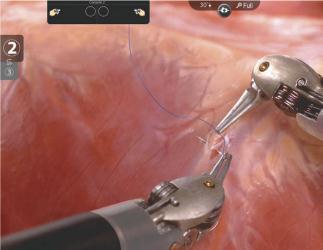
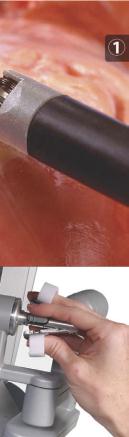
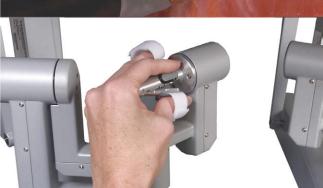
“With the robot, a surgeon has 3-D
vision and eight degrees of freedom
with the wrist,” Dr. Sue Ghosh said.
“So you’re able to do very delicate
movements that you weren’t able
to do before, even with a laparo-
scopic procedure.”
This greater amount of finesse can
mean that uninvolved organs and
tissues need not be disturbed. For the
patient, that may result in less pain
and less bleeding.
If you’re interested in da Vinci
surgery, talk with your
primary care doctor to see if
it’s an option for you. You
can also visit
tricitymed.org/
robot
or call Tri-City Health
Link at
855.222.TCMC
(8262)
or en español
at
855.SALUD.TCMC
(
725.8382
).
“The range of
motion and the
degree of freedom
with which you can
move instruments
is far better,” said
Dr. Paul Mazur, cardio-
thoracic surgeon at
Tri-City Medical Cen-
ter. “This can make
some surgeries easier
and shorter compared
to using traditional
techniques.”
Dr. Mazur performs
heart bypass, blood
flow restoration and
lung procedures with
the robot. While he feels many patients
are good candidates for the robot, he
finds it’s often his frailer patients who
benefit most from the less invasive
nature of this technique. (Read about
the first local cardiothoracic surgery
with the robot on the next page.)
Getting Directly
at the Problem
Other patients may also benefit from
choosing robotic surgery. Dr. Sue Ghosh
considers the da Vinci an especially
good tool to use for obese patients.
“The robot allows you to bypass
fat and get into the spot you are actu-
ally operating on,” she said. “We find
that we can avoid many wound issues
and blood clots when we use this
technique for these patients.”
Getting into very specific, small
spots is part of the lure of using the
robot for many surgeons.
“This is really where the da Vinci
gives you an advantage over many
traditional laparoscopic techniques,”
Dr. Fierer said.
GOOD HANDS: FIRST ROBOTIC SURGERY A SUCCESS
When Oceanside resident Shirlynda
Kelley had surgery with the new
da Vinci robotic surgical system at
Tri-City Medical Center, she knew
she was in the right place.
“Everyone was so focused and
excited about the procedure,”
Kelley, 51, said. “They really took
great care of me.”
That personalized care is stan-
dard at Tri-City Medical Center.
And with the new da Vinci Si HD
Surgical System, the medical
center is at the forefront of medical
technology, as well.
Great Benefits
The da Vinci system is designed
for minimally invasive procedures,
with a 3-D, high-definition camera
and instruments that provide the
surgeon with more dexterity than
the human hand.
“It’s a great tool to use for
patients having a hysterectomy,”
said Dr. Sue Ghosh, Tri-City
Medical Center gynecological
oncologist and surgeon. “It
has the advantages of both
robotic and minimally
invasive surgery.”
It also provides these impor-
tant benefits:
• Shorter hospital stays
• Less risk for infection
• Smaller incisions—about the
size of a dime
• Less pain
“My hysterectomy with the
da Vinci hurt far less than my
previous gallbladder surgery,”
Kelley said. “My pain the first
day was only 2 on a scale of
1 to 10. I’m now cancer-free,
and I didn’t need chemo or
radiation therapy.”
Surgery
Winter 2012
|
Healthy You
7